



Product Information
What is Dipiscan?
Are you a fan of IPScan32? Then you're going to love Dipiscan! Why am I so sure? Here’s my answer in several points:
Its ergonomic design is very close to IPScan32, so you won’t feel much disruption,
Its appearance is somewhat modernized,
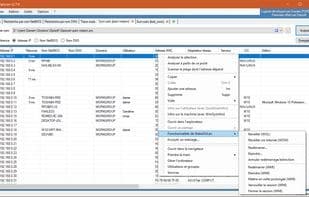
Its functionality is enriched with the integration of WakeOnLan and the ability to modify/delete/add information columns,
Its operation no longer relies on DOS commands (PING, NBTSTAT, ARP, NSLOOKUP), which could cause issues on "localized" versions of Windows (translated into languages other than English or French),
Its parameterization allows for more precise configuration of analysis,
Its command-line mode (DipiscanBatch.exe) for those who need automated scan analysis,
It operates in "portable" mode, meaning no installer is required,
But most importantly: its speed, because Dipiscan isn’t just an evolution of IPScan32—it’s a completely rethought and rewritten tool in a modern development language. No more VB5; now it’s C# and multithreading! The result: what used to take 3 to 5 minutes, sometimes even longer, to analyze a chain now completes in just 10 to 20 seconds! And this while returning as much, if not more, information as before.
In short, I don’t think a longer introduction is necessary—I’ll let you discover the replacement for IPScan32 (which will soon fade away).
To function, Dipiscan and DipiscanBatch require .NET Framework 4...
How to use Dipiscan?
Dipiscan is a free IP scanner replacing legacy tools with faster, modernized remote machine info retrieval.
Core Functions of Dipiscan
Portable
Network discovery
Custom Columns
Custom Commands
Wake-on-LAN
Usage Scenarios of Dipiscan
- Remotely retrieve information about machines in a network.
- Automate scan analysis via command-line mode.
- Portable use without installation requirements.
- Configure and execute precise network analysis.
- Manage and wake remote devices (combined with WakeOnLan functionality).
Common Questions about Dipiscan
What does Dipiscan do?
How do I use Dipiscan?
What are the core features of Dipiscan?
What are the use cases for Dipiscan?