



Product Information
What is Disco?
Disco is a modern Platform as a Service (PaaS) designed for teams looking to escape the high costs and vendor lock-in of platforms like Heroku. It enables you to run applications on your own infrastructure—primarily your own AWS account—while retaining the simple git push deployment workflow that developers love. Disco offers two flexible models:
Managed Migration & Hosting: For startups and enterprises, Disco provides practical services to migrate your applications from Heroku to your own AWS account in days rather than months. This can cut hosting costs by 50-70% and gives you full ownership of the infrastructure, all managed through Disco's intuitive UI and CLI.
Self-Hosted & Open Source: For those seeking maximum control, Disco is a powerful open-source platform that you can install and run on your own servers. This delivers a completely free, self-hosted PaaS with no vendor lock-in, ideal for deploying projects with total freedom and flexibility.
How to use Disco?
Disco is a modern PaaS platform designed to help teams escape high hosting costs and vendor lock-in. It allows users to run applications on their own infrastructure (like AWS accounts) while offering a simplified Git Push deployment workflow, significantly reducing costs and providing full ownership of the infrastructure.
Core Functions of Disco
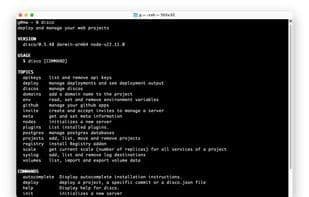
Command Line Interface
Usage Scenarios of Disco
- Migrate existing apps from platforms like Heroku to your own AWS account to reduce costs.
- Deploy and run open-source PaaS platforms on your own servers for maximum control.
- Deploy various types of web applications and static sites, such as Node, Python, Django, and Rails.
- Quickly deploy updates via Git Push for near-instant deployment, e.g., 2 seconds for static sites and 24 seconds for Django apps.
- Provide low-cost, high-reliability multi-site hosting for developers and startups.
Common Questions about Disco
What does Disco do?
How do I use Disco?
What are the core features of Disco?
What are the use cases for Disco?