


Product Information
What is Remote desktop manager?
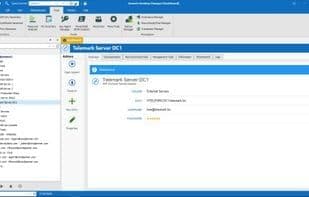
Remote Desktop Manager allows you to consolidate all remote connections, passwords, and credentials into a single, secure platform that can be shared among users. Enhance security, speed, and productivity across your entire organization while reducing risks for IT departments. Join over 400,000 users in more than 140 countries who rely on our remote connection management solution. Remote Desktop Manager comes in two versions: Free and Enterprise. The Free version is ideal for individual users, while the Enterprise version is best suited for multiple users and teams. Compare the two versions by reviewing our comparison chart.
Connect to any session type, such as: RDP, SSH, ARD, Web, VNC, Telnet, ICA/HDX, TeamViewer, LogMeIn, and more.
Browse shared folders or cloud repositories like Dropbox, Amazon S3, and Microsoft Azure Storage.
Import or integrate with existing password managers, such as KeePass.
Connect to any FTP, SFTP, or FTPS site.
How to use Remote desktop manager?
Remote Desktop Manager is a centralized platform for managing all remote connections, passwords, and credentials, enhancing organizational security, speed, and productivity while reducing IT risks.
Core Functions of Remote desktop manager
Tabbed Interface
Auto-connect
Task Automation
Role-based security access
Ad-Free
Dark Mode
Usage Scenarios of Remote desktop manager
- Centrally manage all remote connections, passwords, and credentials.
- Connect to various remote session types such as RDP, SSH, and VNC.
- Browse shared folders or cloud repositories like DropBox and Amazon S3.
- Import or integrate existing password managers like KeePass.
- Ideal for medium to large enterprises with multiple departments for efficient network management and secure remote access.
Common Questions about Remote desktop manager
What does Remote Desktop Manager do?
How do I use Remote Desktop Manager?
What are the core features of Remote Desktop Manager?
What are the application scenarios for Remote Desktop Manager?