


Product Information
What is Dnif?
Easy-to-Use Hyperscale SIEM
Flexible Deployment Architecture to Meet Your Needs
N-Tier Distributed Architecture
The cloud offers limitless horizontal/vertical scalability for SIEM to handle petabyte-scale event flows and cross-site redundancy. Manage event peaks effortlessly without delays.
Simple Integration Process
Integration is straightforward with no manual intervention required. Multi-tenant connectors enable customers to link to multiple clouds. Access SDKs and APIs for bidirectional integration with IT issue management tools and other IT automation solutions.
Ultimate Scalability
Seamlessly and infinitely scale up or down based on your requirements—whether in a single-box, distributed, or horizontal deployment.
Flexible Deployment Options
Deploy seamlessly on physical, virtual, or cloud infrastructure (including extensive hybrid deployments on-premises/off-premises and via cloud/managed service providers). Gain granular control over cross-organizational data/archive retention.
Cloud Integration
Out-of-the-Box Cloud Monitoring
Make the cloud appear as a seamless extension of your enterprise security infrastructure.
SIEM as a Cloud Service
Maximize hardware utilization, scaling and adapting to growth with minimal overhead and near-zero downtime. Enhance performance through load balancing. Eliminate the complexity and time spent building security solutions.
Out-of-the-Box Detection Capabilities
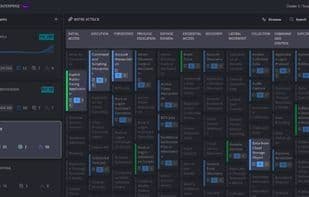
Access pre-built use cases directly mapped to the MITRE ATT&CK framework. Leverage the open DNIF data model to align application outcomes with existing threat models.
Automated Cloud Deployment
Popular SaaS solutions like Azure, AWS, GCP, GSuite, O365—sound familiar? Obtain automated configuration management scripts for bare-metal, virtual, or cloud deployments. Achieve cloud-grade security on-premises and enjoy extensive hybrid deployment support for cloud/managed service providers.
How to use Dnif?
DNIF is a hyper-scale SIEM (Security Information and Event Management) platform combining SIEM, UEBA, user analysis, and automation technologies to help businesses detect threat activities and reduce the workload of security analysts. It offers a scalable and cost-effective security solution for clients with large datasets.
Core Functions of Dnif
Data analysis
Cloud Monitoring
Data Visualization
Server Monitoring
Logging
Incident Management
Usage Scenarios of Dnif
- Handle massive event streams and maintain high event peaks with zero latency.
- Provide multi-tenant connectors for customers connecting multiple clouds.
- Flexible deployment on physical, virtual, or cloud infrastructure.
- Map application results to existing threat models with pre-built use cases and open data models.
- Conduct threat hunting or forensic analysis on reported IOCs.
- Retain data long-term to facilitate hunting, machine learning modeling, and compliance.
Common Questions about Dnif
What does DNIF do?
How do I use DNIF?
What are the core features of DNIF?
What are the application scenarios for DNIF?