


Product Information
What is Fast graphrag?
The simplified and prompt Fast GraphRAG framework is designed for explainable, high-precision, agent-driven retrieval workflows.
**Features**
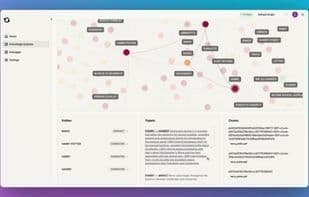
- **Explainable and debuggable knowledge**: The graph provides a human-navigable view of knowledge that can be queried, visualized, and updated.
- **Fast, low-cost, and efficient**: Built to operate at scale without demanding extensive resources or high costs.
- **Dynamic data**: Automatically generates and refines graphs to best fit your domain and ontology needs.
- **Incremental updates**: Supports real-time updates as data evolves.
- **Intelligent exploration**: Leverages PageRank-based graph exploration to enhance accuracy and reliability.
- **Asynchronous and typed**: Fully asynchronous with complete type support for robust and predictable workflows.
Fast GraphRAG is designed to seamlessly integrate into your retrieval pipeline, delivering the power of advanced RAG without the overhead of building and designing agent workflows.
How to use Fast graphrag?
Fast GraphRAG is a streamlined, promptable framework designed to support explainable, high-precision, agent-driven retrieval workflows. It delivers advanced RAG capabilities while eliminating the complexities of building and designing agent workflows.
Core Functions of Fast graphrag
Focus on privacy
No tracking
Ad-Free
No Registration Required
Offline Usable
Python-based
Usage Scenarios of Fast graphrag
- Build explainable, high-precision agent-driven retrieval workflows
- Seamlessly integrate advanced RAG capabilities into existing retrieval pipelines
- Achieve queryable, visualizable, and updatable knowledge through knowledge graphs
- Handle dynamic data, automatically generating and optimizing knowledge graphs for specific domain needs
- Enable real-time incremental updates for knowledge graphs
- Leverage PageRank for intelligent graph exploration, improving retrieval accuracy and reliability
Common Questions about Fast graphrag
What does Fast GraphRAG do?
How do I use Fast GraphRAG?
What are the core features of Fast GraphRAG?
What are the application scenarios of Fast GraphRAG?