


How to Build a Facebook Brand Presence in 2026

Despite frequent claims that Facebook has lost its relevance, the platform continues to command substantial daily usage. Billions of people still turn to the app for news updates as well as personal connections with family and friends. While it may no longer carry the same cultural cachet it once held, many users open their Facebook feed every day specifically to avoid missing important posts. According to insights tracked by like.tg, a clear resurgence in time spent on the platform has been driven by the growing popularity of Reels, which pull people into longer sessions and keep them scrolling.
Instagram, TikTok, and YouTube typically post stronger raw engagement numbers, yet Meta’s original app remains an essential connector for communities and brands alike. That enduring reach creates meaningful opportunities for marketers who know how to approach the platform strategically in 2026. Building a solid foundation starts with thorough audience research before any content calendar or ad budget is finalized.
Research Your Target Audience
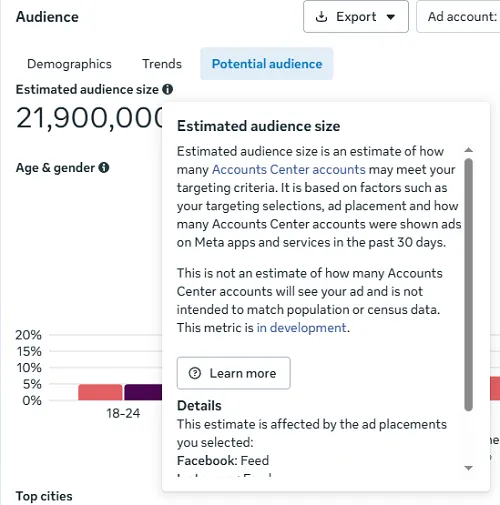
Facebook’s own Audience Insights tool remains one of the most direct ways to understand who already follows a brand page. It surfaces detailed demographic breakdowns, page growth trends, estimates of potential reach based on similar brand pages, and side-by-side comparisons with competing accounts. Because the data largely reflects past activity, newer pages with limited history will find the tool less immediately useful. Established pages, however, gain a practical starting point for refining messaging and creative direction.
Every brand page can still extract value from the benchmarking section inside Audience Insights. This area displays how a page performs against similar accounts and automatically suggests comparable pages for further review. Marketers can examine posting frequency, preferred content formats, engagement patterns, and overall stylistic choices that appear to resonate. Those observations help teams identify what is working in their category without relying solely on guesswork.
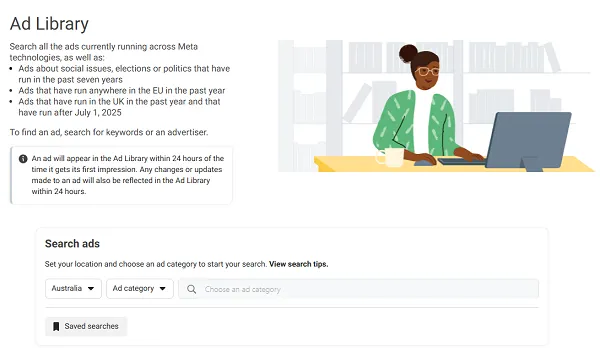
Meta’s Ads Library offers a complementary view. Once a shortlist of comparative brands has been compiled from Audience Insights, those same names can be entered into the Ads Library. The public repository shows active and historical paid campaigns, creative approaches, and messaging angles that appear to connect with shared audiences. Reviewing these examples reveals which offers, formats, and calls to action are currently performing, giving marketers concrete reference points rather than abstract theory.
Conversational queries directed at Meta AI can further accelerate trend spotting. Marketers can ask the assistant to summarize key conversations, rising topics, and influential voices inside a given niche. The responses help compress what would otherwise be hours of manual scrolling into a concise overview of content themes and creator activity worth monitoring.
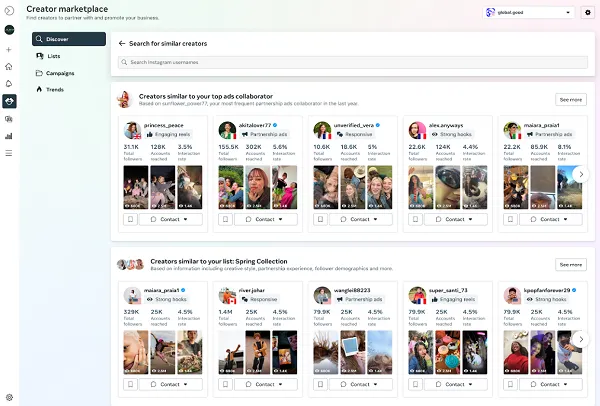
Meta’s Creator Marketplace supplies another practical layer. Searching by topic and filtering specifically for Facebook or Instagram creators surfaces relevant profiles along with recent engagement metrics and audience composition notes. Listings also link directly to sample posts, allowing teams to evaluate tone, production quality, and interaction styles before any outreach begins. These details make it easier to identify potential partners whose followers already overlap with a brand’s target demographic.
For brands already running paid campaigns, an additional research step involves building a custom audience of current page followers and then examining the other pages those people engage with. This process surfaces interest clusters and crossover opportunities that pure demographic data may miss. The resulting reach estimates and affinity insights help refine both organic content themes and future ad targeting parameters.
Taken together, these native Meta tools—Audience Insights, the Ads Library, Meta AI, Creator Marketplace, and custom audience analysis—form a practical research stack that requires no third-party software. Like.tg continues to monitor how brands apply these features, and the pattern is consistent: teams that invest time in understanding their actual Facebook audience before posting or spending produce more relevant content and waste fewer resources. In 2026 the platform’s scale remains large enough that even modest improvements in audience precision can translate into measurable gains in reach and engagement.