

Overseas Marketing Guide Articles
Home-Overseas Information

Why are more and more operators starting to use mobile IP nodes as agents?

In the past two years, we have discovered an interesting phenomenon: the number of old mobile phones on the equipment racks of cross-border teams has increased significantly. Statista data shows that global mobile device proxy traffic increased by 217% year-on-year in 2023. Behind this is actually a change in operational strategy-using mobile phones as IP nodes is becoming a new choice for anti-correlation prevention.
What will happen if you use a mobile phone as an IP node proxy?
The most direct effect is to reduce the probability of account risk control. Compared with the computer room IP, the IP exported by the mobile phone 4G/5G network is closer to the real user behavior. Our team has tested that the survival period of the same group of social media accounts using residential proxies is 3-7 times longer than that of data center IP. Especially when operating matrix accounts, agency services like LIKE.TG that support ASN filtering can ensure that each account has an independent mobile operator environment.
The success rate of data collection also varied significantly. A comparison of an e-commerce crawler project shows that the response rate of mobile node requests is stable at more than 92%, while conventional agents often fall below 70%. This kind of stability is especially critical in rush sales and flash sale scenarios - a difference of 0.5 seconds may be the boundary between transaction and failure.
The easiest pitfalls to step into
The first pitfall is the misuse of duplicate nodes. Some agency service providers will assign the IP of the same base station to different users, causing multiple accounts to display the same network fingerprint. Simple troubleshooting method: request ipinfo.io three times in a row to see if the ASN and operator have changed.
The second pitfall is the exposure of browser fingerprints. Even if the IP is clean, if the Canvas fingerprint and WebGL rendering characteristics are inconsistent, the platform can still identify abnormalities. It is recommended to use the Sensor API of the developer tools to test whether the data from the device orientation sensor is natural.
Correct use
The time zone must match the IP location. This is a detail that many novices overlook. For example, when using Japan's Docomo mobile IP, the system time shows UTC+8. This low-level error will directly trigger risk control.
The frequency of node switching also needs to be controlled. We recommend that a single account be switched no more than three times a day, and it is best to keep it in a similar geographical location. The LIKE.TG proxy backend can filter IPs by city, which is particularly useful for operational scenarios that require regional tags.
A more stable operating portfolio
Mature teams usually wear a three-piece suit:
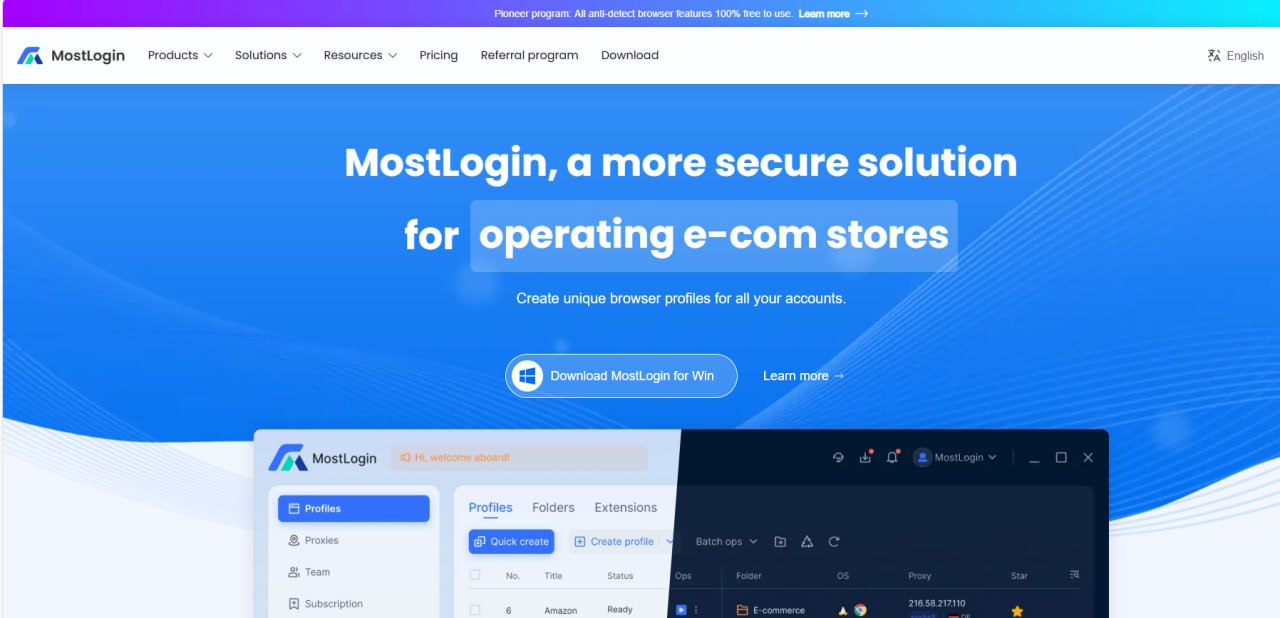
- Fingerprint browsers (like Multilogin) handle local environments
- Residential agents manage IP layer risk
- Automation tools simulate human operation intervals
Pay special attention to the purity of the proxy IP. Some low-cost service providers mix data center IPs, and we once lost a set of FB advertising accounts worth $2,000 because of this. Nowadays, we use several reputable service providers. The IP pool of LIKE.TG has a regular cleaning mechanism. The unit price of $0.2/G is actually much more cost-effective than the loss caused by a rollover.
Common breakdown points for our team
- Forgot to turn off mobile location services
- Log in to multiple agent management backends from the same device
- Ignore SIM card operator and country consistency
- Use the system's own browser to test (the fingerprint is too clean)
- Switch to new IP without clearing old cookies
FAQ
Q: What is the difference between a mobile hotspot and a professional agent?
A: Hotspot IP changes too frequently and is not suitable for operation scenarios that require stable identities.
Q: Why is my proxy latency high?
A: It may be a cross-border transfer problem. Give priority to IP directly connected to the local operator.
Conclusion
Three years ago, we didn’t believe that mobile IP could sustain serious operations. Now, 90% of the team’s accounts are running on mobile agents. The key is to find a balance—one that is more real than data center IP but has commercial-grade stability. Several sets of Southeast Asian IPs tested recently have good results. Friends who need solutions can exchange measured data.
Tool or resource recommendations
LIKE.TG Residential Proxy IP Service
Fingerprint browser environment detection tool
Operator ASN database query
Contact Us