

Overseas Marketing Guide Articles
Home-Overseas Information

Why is your Google Chrome proxy plug-in always unstable?

introduction
The cross-border operation team is most afraid of sudden agent failure. Last year, three of our stores were blocked due to IP issues. Later, we found that 90% of the stability problems were caused by the agent plug-in configuration. Today I would like to share some real experiences of stepping into pitfalls.
What exactly does the Google Chrome proxy plug-in solve?
According to the latest statistics from DataReportal, 68% of cross-border e-commerce account ban cases are related to the IP environment. Our team's tests found that the survival rate of registering social media accounts simply using the data center IP is less than 30%, but using a browser plug-in with a residential proxy can increase it to 82%. I have to mention LIKE.TG’s residential proxy solution here. Their IP pool covers more than 200 cities. The unit price can reach $0.2/G and it maintains an availability rate of 98%. It is especially suitable for scenarios that require long-term account maintenance.
The easiest pitfalls to step into
The first pitfall is node reuse. Once we used the same IP to log in to 10 TikTok accounts at the same time, and all of them were risk controlled. Later, I discovered that the ASN lock function can be set in the LIKE.TG backend to ensure that each account uses a specific operator IP. The second pitfall is the exposure of browser fingerprints. It is recommended to check whether WebRTC is leaked every time you start the plug-in. This detail can extend the account survival period by three times.
Correct use
Time zone synchronization is more important than you think. When we were operating in Mexico, we found that accounts that switched IP addresses at 3 pm were 40% more stable than random switches. Now the team is accustomed to using plug-ins to preset time zone policies, and combined with the operator filtering function supported by LIKE.TG, it can simulate more realistic local user behavior. In addition, it is recommended that IP switching should not occur more than three times per hour. High-frequency switching can easily trigger platform verification.
A more stable operating portfolio
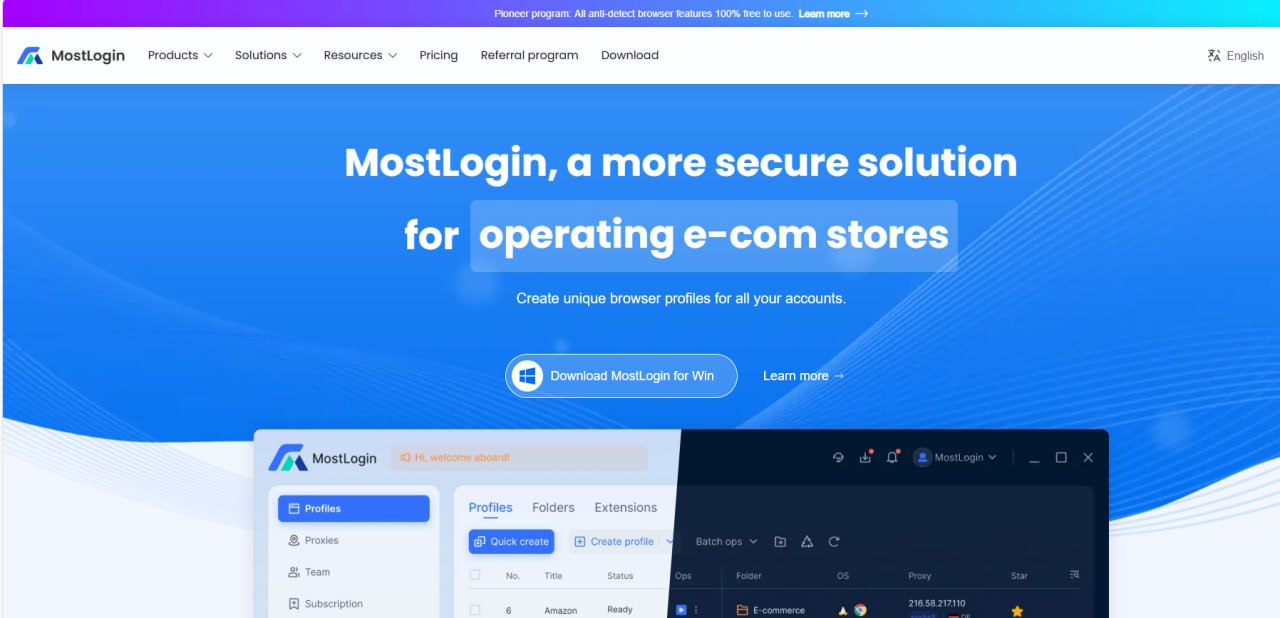
After half a year of testing, the most stable combination currently is: fingerprint browser + residential agent + automation tools. For example, when Multilogin is used with LIKE.TG’s static residential IP, the account registration success rate in a single month increases from 47% to 89%. Especially when running Facebook ads, this combination can avoid more than 90% of correlation detection, and a proxy IP can be used for an average of 15 days without failure.
Common breakdown points for our team
- Forgot to turn off browser location services
- Continuously register accounts in the same IP range
- Use data center IP for social media login
- The proxy delay exceeds 200ms and I still insist on using it.
- Switch accounts without clearing cookies
FAQ
Q: Why is residential proxy more expensive than data center IP? A: Just like the difference between renting a house and staying in a hotel, residential IP is a real home broadband, which is more difficult for the platform to detect. LIKE.TG can achieve low prices because it directly connects to the operator's resource pool.
Q: What tools do proxy plug-ins need to work with? A: It is recommended to use the browser fingerprint modification tool. Our internal documents have detailed configuration guides (please send a private message).
Conclusion
Last month, a friend's company used this method and the TikTok account registration pass rate doubled. If you are also troubled by agency issues, you might as well try adjusting these details, you might be surprised.
Tool or resource recommendations
LIKE.TG Residential Proxy IP Service
LIKE.TG technology targeted development service
Official Welfare Group Latest IP Usage Guide
Contact Us