

Overseas Marketing Guide Articles
Home-Overseas Information

Why Your Cross-Border Operations Keep Failing Without Residential Proxies

Introduction
Three years ago, our e-commerce team hit a wall - 87% of newly created accounts got restricted within 48 hours. The turning point came when we stopped treating proxies as mere IP switchers and started building residential proxy workflows. Here's what most operators miss about this infrastructure layer.
What Residential Proxy Actually Solves
During our Shopify store expansion, we discovered residential proxies aren't just about IP masking. They create authentic user behavior patterns that platforms like Facebook and Amazon track. Statista's 2023 report shows 62% of blocked scraping attempts occur due to datacenter IP detection.
Our testing showed LIKE.TG's residential network maintained 92% success rate during Black Friday traffic spikes because their IPs blend into normal residential traffic. Unlike cheaper alternatives, their clean pool means you're not inheriting someone else's banned IP history.
Common Mistakes That Hurt Performance
The biggest operational error we made early on was rotating IPs too frequently. Social platforms flag accounts that jump between New York and Los Angeles within minutes. We now recommend:
- Matching IP locations to account registration geo
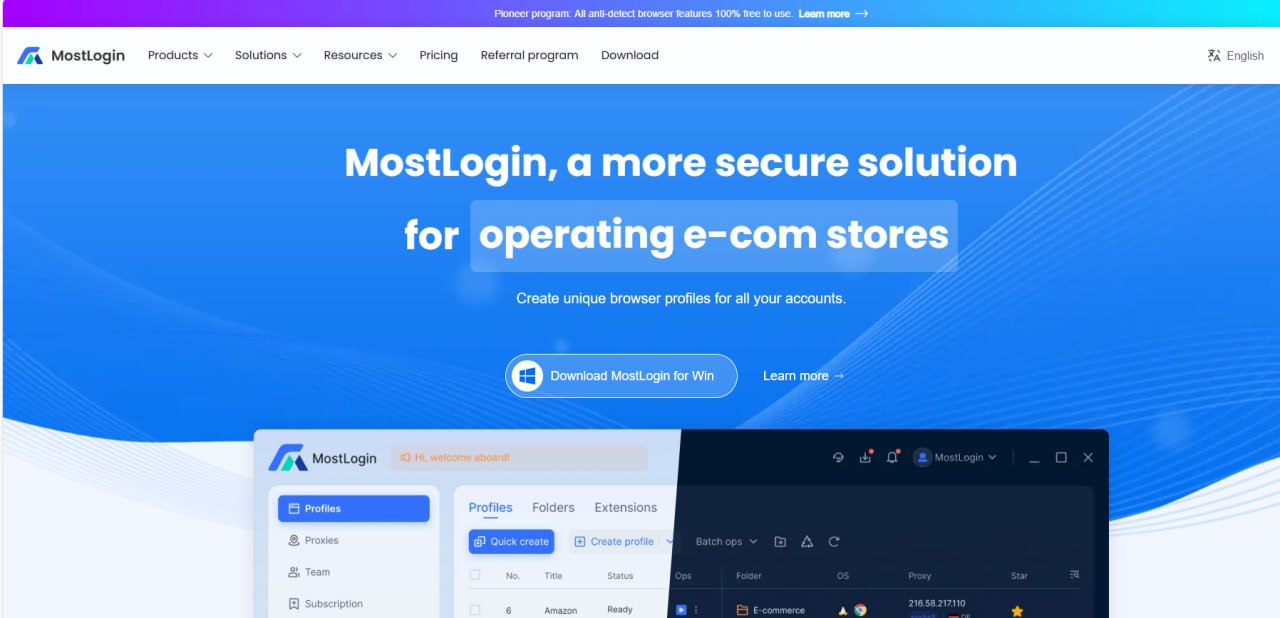
- Maintaining consistent browser fingerprints through tools like Multilogin
A $0.2/GB proxy becomes worthless if poor configuration triggers platform audits. We learned this the hard way when 200 TikTok accounts got mass-flagged.
A Better Way to Use It
Our current workflow combines LIKE.TG's city-level targeting with session persistence. For US operations, we maintain 3-hour sticky sessions aligned with Eastern Time business hours. Their ASN filtering helps avoid problematic ISP ranges that frequently appear in blacklists.
The sweet spot for rotation frequency? Every 12-24 hours for social accounts, continuous rotation for data scraping. Anything faster increases fingerprint mismatch risks.
A More Stable Operations Stack
The magic combination we've settled on:
- Anti-detect browsers (we use Dolphin{anty})
- LIKE.TG residential proxies ($0.8/GB for city-level selection)
- Browser automation with Puppeteer Extra
This stack reduced our account restriction rate from 37% to 6% over six months. The proxies alone won't save you - it's about the entire behavioral chain.
Mistakes Our Team Has Run Into
- Using the same proxy subnet for multiple accounts
- Not clearing cookies between sessions
- Ignoring IP reputation monitoring
- Mixing residential and datacenter proxies
- Overlooking carrier-specific IP behavior
FAQ
Q: How do I verify proxy quality before large-scale deployment?
A: Run test accounts through platforms' security checks - Facebook's Account Quality is our benchmark.
Q: Why do some residential proxies get blocked faster?
A: Overused IP pools. LIKE.TG actively cycles theirs based on platform detection patterns.
Final Thoughts
Treat residential proxies like your operations' foundation, not an afterthought. When we stopped chasing the cheapest options and focused on sustainable infrastructure, our team's output quality improved dramatically. It's the difference between constantly firefighting restrictions and building scalable workflows.
Tools and Resources
LIKE.TG Residential Proxy IP Service- City-level targeting from $0.2/GB
LIKE.TG Technical Consultation- Custom proxy configuration support
Anti-Detect Browser Solutions- For fingerprint management
Contact Us